Saturday, October 19, 2019

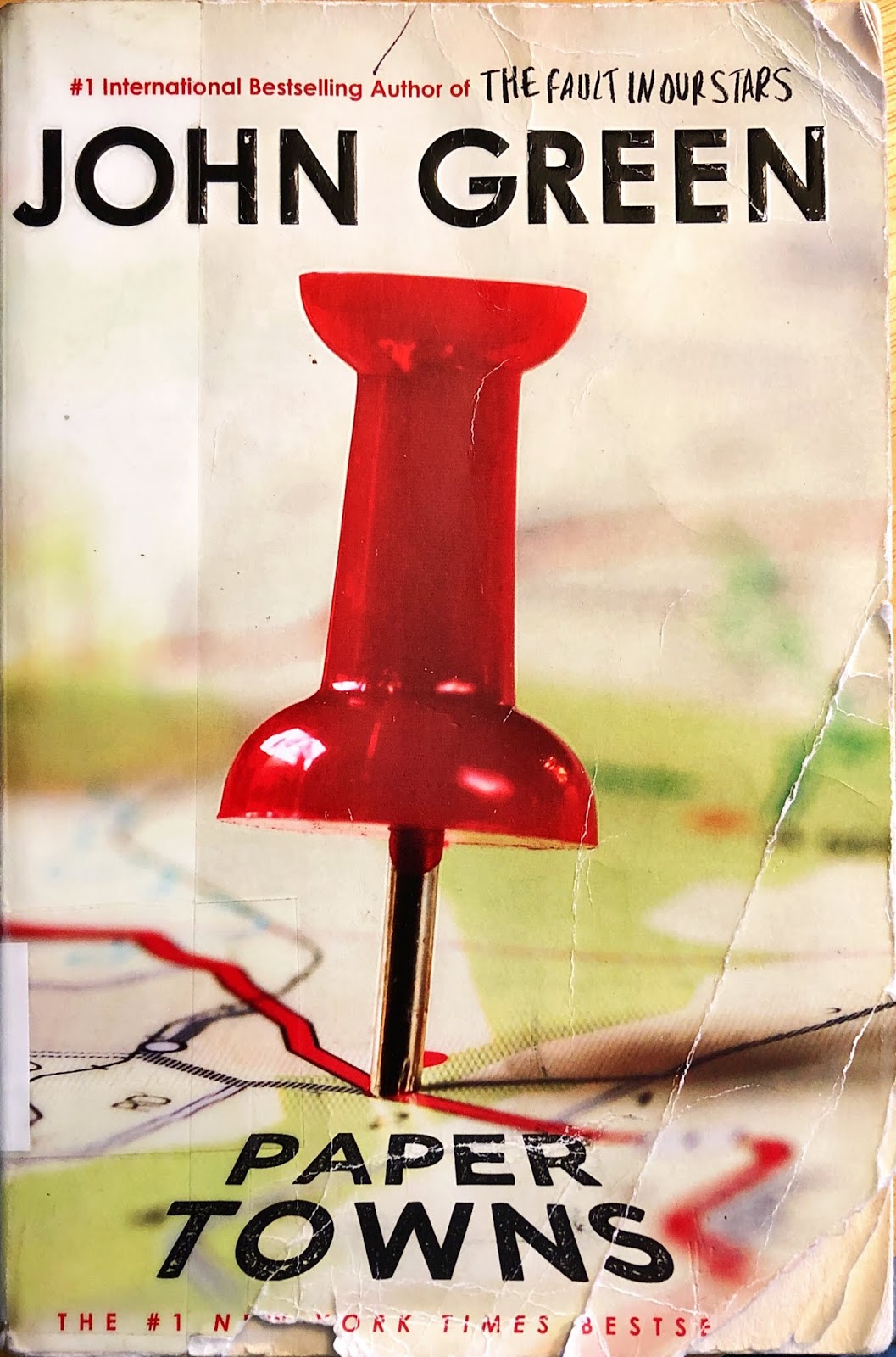
Mystery/Suspense: Paper Towns

Image: 


Evaluation of the book:

Even though Paper Towns is classified as a mystery or suspense novel, it is, above all, a realistic story about characters who are very much just normal teenagers living (relatively) normal lives. The cast of characters from protagonist Quentin, to his quirky band member friends, to adventurous Margo, are all vividly depicted and very realistic. I could imagine flying down to Florida and meeting any one of them in the local Publix. Teenagers reading this novel will easily see themselves or their friends in these well-written characters.

The theme of the novel is just as relatable as the characters themselves. It is a story of teenagers figuring out how to live their lives in the moments between childhood and adulthood. Most importantly, these teenagers learn that every person is different and, even if high school or parents put certain labels on you, every person must live their own lives and allow those around them to do the same. We are constantly putting labels or defining those around us; John Green’s novel asks simply that we take a step back and let those around us be their own person.

The tone of the novel is overall lighthearted. Even though it carries an important message and touches on some darker themes, Paper Towns is very much just an enjoyable, lighthearted novel about a few teenagers living their lives, stumbling upon a mystery, and going on a great adventure of discovery - both of self and of others. Green’s lighthearted tone helps him avoid an overly didactic outcome to his novel.

Response:

I learned a lot from this novel about how often we fall into the trap of defining those around us. With Quentin, I learned “what a treacherous thing it is to believe that a person is more than a person” (p.282). Too often we idolize the people we love and, in doing so, we do not give them a chance to be themselves, simply a person. Although I’m not normally a John Green fan, I really enjoyed this novel. It taught important lessons while being extremely fun to read. I was honored to roadtrip alongside Quentin and his friends as they journeyed to find Margo. John Green writes well and his deep understanding of the teenage mind shines through his narrative.

Conclusion:

Its strong characters, important theme, and lighthearted tone make John Green’s Paper Towns an excellent YA novel. It neither hides nor lingers on the dirty side of growing up, but it lets the reader live a realistic, fun teenage life alongside the quirky, adolescent characters. I’d recommend this novel to any teenager in high school who might be struggling with self discovery and having difficulty relating to those around him/her. The message is clear: live and let live.

APA Style Reference:

Green, J. (2012). Paper towns. New York, NY: SPEAK.

Mystery/Suspense: Miss Peregrine's Home for Peculiar Children


Image:


Evaluation of the book:


Layered with tension, Miss Peregrine’s Home for Peculiar Children is an absolute page turner. Beginning with the mysterious death of protagonist Jake’s grandfather in the first few pages, the story takes the reader - and Jake - on an adventure to figure out who exactly Jake’s grandpa is. Jake doesn’t know who or what his grandfather is and, as it turns out, he doesn’t know who or what he himself is, either. The reader follows Jake into the unknown and the layers of tension keep building: we don’t know what we’ll discover on the mysterious island in Scotland; we don’t know when or if or how the hollows (the bad guys) will come; we don’t know whether Emma will fall for Jake even though she used to be in love with his grandfather. The reader keeps turning the pages, faster and faster, in an attempt to learn more and to appease the building tensions.

The buildup of tension is further helped along by the first person point of view of the story. Told from Jake’s point of view, the story has a necessary air of mystery and suspense because we the readers don’t know any more than Jake does about his situation and what is to come. We experience each of the tensions noted above in real time as Jake discovers and lives through them. Jake doesn’t know what’s to come; neither do we. But we sure want to find out!

Finally, the book is laced with spooky images that are like a cherry on top of the already suspenseful and spooky story and tone. Author Riggs will vividly describe peculiar people and setting and then, on the very next page, the reader discovers a black and white photograph of that exact setting or person. The photos are eery and creepy and help cement the spooky mood of the book.

Response:

Miss Peregrine’s Home for Peculiar Children is the perfect Young Adult novel. It’s well-written, exciting, and perfectly paced. It’s characters are well-developed and realistic; it’s easy to relate to them, even if the story itself is fantastic. The photographs throughout give the perfect finishing touch of spookiness. I enjoyed this book immensely as an adult, but I can see anyone from age 12 and up enjoying it thoroughly. It truly spans the entire age range of what makes up a “Young Adult” reader. Mystery & suspense are not my go-to genres, but I was pleasantly surprised by how much I enjoyed this book.

Conclusion:


Suspenseful, well-written, and visually exciting, Miss Peregrine’s Home for Peculiar Children is an excellent novel. I recommend that anyone, even those who normally steer clear of fantastical or suspenseful mystery novels, give this novel a chance because I believe that they, like me, will be pleasantly surprised. I’m eagerly waiting for the day when I’ll have time to read the second book in Riggs’ Peculiar Children series because I want to journey alongside Jake and his friends as they continue their adventures.

APA Style Reference:

Riggs, R. (2013). Miss Peregrine’s home for peculiar children. Philadelphia, PA: Quirk Books.

Inspirational: The Rainbow Fish

Image


Evaluation of the book:

The Rainbow Fish is the story of a beautiful, sparkly fish who learns the importance of sharing in order to make friends and be happy. The message is simple: sharing is caring. The message is so simple, in fact, that the story could be told purely by the illustrations. In the beginning, there’s a fish with many shiny scales. Then all the fish swim away from him. Then he talks to an octopus. Then he gives a shiny scale to a little fish. Finally, all the fish in the sea each have one shiny scale. The end. This book is purely didactic.

The Rainbow Fish has an instant appeal for children because of the sparkly fish scales present on each page. The reader’s eyes are drawn to the Rainbow Fish and his beautiful, sparkly scales. The illustrations themselves are beautiful watercolors (appropriate for the underwater story!), but the shimmery scales let the child reader understand how desirable the Rainbow Fish and his shiny scales really are. The reader understands well the other fishes’ jealousy.

In contrast to the illustrations, the text itself is rather ugly. The font is basic and the bold text blocks do not fit in with the softer illustrations. Unfortunately, the ugliness of the text makes the book as a whole feel less sophisticated. Not only is the visual appeal of the text unpleasant, the writing is awkward and doesn’t flow very well.

Response:

My response to this book is very mixed. On the one hand, the message of “sharing is caring” is a good one. The Rainbow Fish learns (and teaches) an important lesson when, “His most prized possessions had been given away, yet he was very happy.” The world is filled with entitled people, especially the younger generations. This book is important because it addresses this issue and teaches children the dangers of entitlement. On the other hand, however, there are potentially dangerous traces of socialism - give everything away; be exactly like everyone else; don’t be unique - that I do not in any way agree with. In addition, the story itself seems a bit of a stretch. The wise octopus seems out of place; the annoying little blue fish comes back right at the perfect time; the other fishes immediately like the Rainbow Fish because he gives them his scales, even after he was nasty to them. These all seem a little too out of sync with reality for my adult brain. The translated language of the text is also a bit awkward, it doesn’t flow naturally. For example, the text is mostly written in third person until after the octopus incident when it too-suddenly shifts to first person: “Give away my scales? My beautiful shining scales? Never.”

Conclusion:

I loved this book as a child and definitely only remember the “sharing is caring” message and the beautiful illustrations. This book is a good tool for teachers and librarians to teach the importance of sharing and being generous with others. Children might notice the awkwardness of the language, but, as is true with me, the message and illustrations will stick with them even when the words have been forgotten.

APA Style Reference:

Pfister, M. (1992). The rainbow fish (J. A. James, Trans.) New York, NY: North-South Books.

Monday, October 14, 2019

Realistic Fiction: The Perks of Being a Wallflower

Image: 


Evaluation of the book:

The Perks of Being a Wallflower is the first person account of young Charlie’s adventures as a freshman in high school. Written in the form of letters, Charlie’s weirdly simple language is at first hard to follow and seems unnatural. However, once you get used to it, it becomes a mesmerizing look into the head of Charlie, who turns out to be a fascinating observer of the world around him. In the beginning, Charlie seems dumb or mentally slow. However, Charlie’s intelligence becomes more and more evident as the pages go on. His intelligence is revealed both explicitly, as the reader reads his grades and his teacher’s compliments, and implicitly, as the reader begins to understand the depth and accuracy of his simple observations of day to day life.

Each page of The Perks of Being a Wallflower is filled with great one-liners (“I think it would be great if sledding were always enough, but it isn’t” p.74) and stunning observations of real life (“It’s like when you are excited about a girl and you see a couple holding hands, and you feel so happy for them… And all you want is to feel happy for them because you know that if you do, then it means that you’re happy, too” p.96). Although Charlie seems weird to the casual reader; he proves himself to be an incredibly smart young man. As the pages go on, the reader finds himself/herself agreeing more and more with Charlie’s observations and, as a result, thinking of Charlie not as weird, but as relatable.

The letter form of the novel cements the relationship between the reader and Charlie. The letters are addressed simply “Dear friend;” the recipient is anonymous. As the reader begins to relate to Charlie’s observations of the world, he/she also begins to put himself into the shoes of the recipient. Because of this, when, toward the end of the novel, it’s revealed that Charlie has been abused by his beloved aunt, the reader is in a position to feel pure empathy and sorrow for his/her friend, Charlie.

Response:

As described above, The Perks of Being a Wallflower is perfectly set up for the reader to develop a strong sense of empathy for Charlie. I personally was shocked and horrified to discover what Charlie had endured as a child at the hands of his aunt. I felt as though it was a dear friend of mine who revealed his horrible trauma. I think it’s important for today’s teens to read stories of this nature, about different and difficult situations, in order to learn how to empathize with people who are different. Chbosky does an excellent job of inviting his readers into this type of empathy and teaching them how to feel for these “different” types of people. Although I found the book tricky to read at first, due to Charlie’s strange voice, once I got into the rhythm of it, Charlie’s voice became mesmerizing and his observations beautiful. The whole book is a stunning piece of literature; personally relatable and incredibly important.

Conclusion:

Mesmerizing and relatable, The Perks of Being a Wallflower is a must read for teenagers, young adults, and older adults as well. Anyone should read this book simply to have the privilege of witnessing Charlie’s observations of life. Chbosky makes an art out of real life, with all its harshness and pain, and invites the reader in to observe it firsthand.

“I just kept quiet and looked around. And I noticed things.” (p.99)

APA Style Reference:

Chbosky, S. (1999). The perks of being a wallflower. New York, NY: Gallery Books.

Picture Book: The Giving Tree

Image: 


Evaluation of the book:

The Giving Tree by Shel Silverstein is a beloved picture book classic. Its pages are beautifully illustrated with simple line drawings drawn by the author himself. The simplicity of the black and white sketches sets the tone for the simplicity of the story and the beauty of the lesson(s) it contains.

The progression of drawings on each page pulls at the reader’s heartstrings. In the beginning, the little boy’s joy at playing with the tree is contagious; towards the end, the reader feels the old man’s exhaustion. Although simple, each page’s drawings tell a complete scene of the story; even if there were no words, the story would be understood simply by looking at the illustrations.

There are words, however, and they reflect the tone of the story line. For the happy childhood days of the boy, there are just a few words per page. The boy does something; the tree is happy. That’s all; all is simple. Then, when the boy grows up and things get more complicated for him, the pages begin to be filled with longer, more complicated blocks of text. However, whenever the boy does something, the tree is happy. The tree’s life is simpler than that of the man’s; Shel Silverstein reflects this by his simplicity of language when he states, “And the tree was happy” several times throughout the book.

Response:

This story’s meaning could be interpreted in so many different ways. Most often and possibly most obvious, it is interpreted as a message about taking one’s loved ones for granted and/or as an illustration of nature’s constant giving and man’s constant taking. However, I personally think it is also about the pains of growing up and how the very act of growing up changes relationships. I’ve learned that things aren’t as simple when you’re older; it’s easy to lose sight of how it used to be. I see this message clearly in The Giving Tree. The beautiful thing about The Giving Tree is that, no matter who the reader is, he or she will always find an important lesson or moral within its pages that reflect his or her own life. This book is absolutely stunning, both in words and illustrations. Each illustration and word just makes you want linger on each page and reflect on the beauty found therein.

Conclusion:

Even though the images and words are simple in The Giving Tree, the lessons found in its pages are many and eternal. Don’t take loved ones for granted. Nature gives; humans take. It’s the simple and little things that make us happiest. Growing up is hard. No matter who reads this book - child or adult - there is a simple lesson to be learned.


APA Style Reference:


Silverstein, S. (1964). The giving tree. New York, NY: HarperCollins.

Friday, October 11, 2019

Easy Reader: Go, Dog. Go!

Image: 


Evaluation of the book:

The first page of Go, Dog. Go! might give the reader the impression that he or she is about to read a dull, instructional book that uses simple illustrations to teach simple words. In a sense, that’s exactly what this book is. However, Eastman goes about it in a way that is much more fun, poking fun at the typical instructional elements. This book has all the elements of more traditional instructional books, like simple words (colors, animals, sizes, directions) but the illustrations and words combined are not so traditional. Big dogs and little dogs don’t normally ride bicycles and push strollers; red dogs don’t normally sit on blue trees, nor do green dogs sit on yellow trees. Yet, simple words like “big,” “little,” “dog,” “red,” “blue,” “green,” and “yellow” are all usually found in instructional picture books.

The illustrations in Go, Dog. Go! are whimsical and delightful. The characters depicted- dogs of various sizes and colors - are animated and full of expression. The words taken by themselves would be senseless; the illustrations bring about meaning to words like “The green dog is up” by showing a green dog glaring at a yellow dog who has pulled him up using a pulley. These colorful, bright illustrations bring the otherwise nonsensical sentences to life… even if the resulting story is equally nonsensical!

The book seemingly contains no plot, nor even any guiding structure. The only consistency throughout the book is the four times a female dog asks a male dog, “Do you like my hat?” Each time, the female dog’s hat gets more elaborate, and each time (until the last time) the male dog says he does not like her hat. Just as the female dog’s hats get more elaborate as the book goes on, so too do the words in the book. Beginning with one or few simple words on each page, the book ends with longer exclamatory, interrogatory, and descriptive sentences. Finally, all the words learned throughout the book (think: colors, directions, and sizes) come together at a giant dog party on top of a tree. Its only at this party, when the female dog is wearing an elaborate hat made up of candy canes, fishing rods, cat toys, ribbons, a potted plant, a feather duster, and more that the male dog finally likes her hat. He likes her party hat just as the reader likes the dog party; an eccentric combination of random things makes for a thoroughly delightful hat or book!

Response:

Go, Dog. Go! is an excellent parody of more formal and traditional Dick and Jane books. By taking the traditional elements of the instructional books and mixing them together in goofy, nonsensical ways, this book ends up sticking with the reader much longer than the dull Dick and Jane stories. Developing readers want to see what happens on the next page; more challenging words are no problem when the story is so silly. The book’s language is rhythmic and the story a ton of fun; growing up, I didn’t realize how much actual information and instruction was hidden in those goofy pages!

Conclusion:


With its colorful illustrations, goofy sentences, rhythmic language, and instructional parody, Go, Dog. Go! is an important book for developing readers to feel confident in their reading abilities, and, most importantly, to have fun while doing it. Written close to 60 years ago, Go, Dog. Go! has an appeal to young readers (and a sense of nostalgia to older readers!) that has withstood - and will continue to withstand - the test of time.

APA Style Reference:

Eastman, P. D. (1961). Go, dog. Go! New York, NY: Random House.

Thursday, October 10, 2019

Picture Book: The Book with No Pictures


Image: 


Evaluation of the book:

The Book with No Pictures is exactly what its name makes it out to be; a picture book with no pictures. Although words do usually play a prominent role in picture books, they usually have pictures to go with them to help tell the story. This book, however, uses only words to engage its readers. Specifically, it uses words to engage its listeners at the expense of its reader. Children normally have pictures to look at while being read to; this book flips things and engages the children in the words themselves because the words make the adult reader do and say funny things.

The bizarre words that the reader must read are distinguished from the normal narration by big, colorful fonts. This way, the children watching/listening can recognize the difference between the “normal” reading and the fun version going on in this book. The large, colorful, weird arrangements of words on a page let the observer know that something special is going on, that the words themselves are doing something different. Otherwise the listeners might think that words like “blork,” “bluurf,” and “BooBooButt” are real words.

From the perspective of the reader, the different colored and sized fonts help determine what voice/tone in which to read the words. Colorful words get special emphasis, and certain arrangements of words get special tones as is obvious by the page that announces that the listener is “THE BEST KID EVER.” The all-caps, double-paged, announcement-like arrangement guides the reader in shouting the words in an old-timey announcer’s voice.

Response:

The Book with No Pictures does a great job showing that words themselves, and the act of reading, can be more than just informational; it can be fun and entertaining. This is an incredibly important lesson for young readers to learn. However, this book’s one downside is that it has to be read out loud in order for it to have its full effect on the listener. A child looking at the book on his own won’t understand what’s going on. That being said, the book is very entertaining and I wish it had been around when I was little so I could have watched my parents read it to my siblings and me!

Conclusion:

An excellent way for children to learn the entertaining side of the written word, I heartily recommend The Book with No Pictures to anyone who reads aloud to children, whether their own or their students. By making adults “say silly things” and make “silly noises,” this book connects children to the written word in a very important way. And it’s vastly entertaining for both reader and listener alike!


APA Style Reference: 


Novak, B. J. (2014). The book with no pictures. New York, NY: Penguin Group.